Since the October 2024 sales exercise, HDB has classed every new BTO project as Standard, Plus or Prime. The class follows the project's location, not its flat types, and it stays with the flat: it sets how long you must live there, whether you may rent it out, who may buy it from you and how much of the sale price goes back to HDB.
This guide sets out each rule as HDB and the Ministry of National Development (MND) state it today, with the date we read each source. Policies change, so check HDB's own pages before you apply.
How HDB decides a project's class
HDB makes what it calls a holistic assessment of each project's location. It looks at three things: how close the site is to the city centre, its transport connections, and whether amenities usually found in a town centre are nearby.
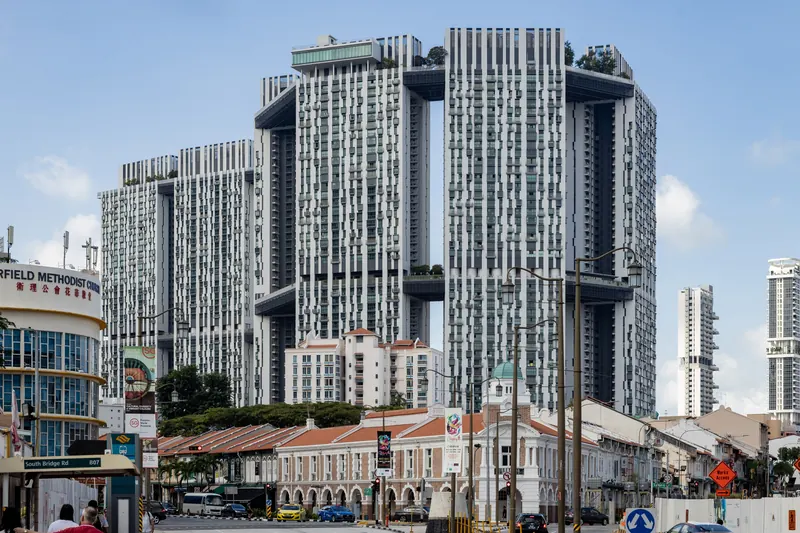
Standard projects are the largest group each year. HDB describes Plus projects as tending to be in choicer locations with good connectivity, and Prime projects as tending to be in exceptionally good locations. HDB also said, when it announced the framework, that Prime flats would not be limited to the Central Area and the towns immediately around the city centre.
Flats launched before October 2024 were not reclassified, with one exception: Prime Location Public Housing (PLH) flats sold before then now count as Prime. Each new project's class is published at its launch, on the HDB Flat Portal and in HDB's press release; BTOLeh's project pages show it too.
The rules side by side
The table follows HDB's own comparison from October 2024, with the income ceilings that rose on 24 August 2026. Choose a class to see its column on a phone.
| Rule | Standard | Plus | Prime |
|---|---|---|---|
| Minimum occupation period | 5 years | 10 years | 10 years |
| Rent out the whole flat | After the MOP, with HDB's approval | Never | Never |
| Rent out spare bedrooms | Yes, 3-room or larger, with approval | Yes, 3-room or larger, with approval | Yes, 3-room or larger, with approval |
| Subsidy recovery when you sell | None | Yes, a set % of the price | Yes, a higher % of the price |
| Resale buyers: citizenship | Citizen or PR household | At least one citizen, with another citizen or PR | At least one citizen, with another citizen or PR |
| Resale buyers: income ceiling | None (unless they use a CPF grant) | $16,000 a month, families and singles | $16,000 families; $8,000 singles |
| Resale buyers: singles | Any flat except 3Gen | Any flat except 3Gen | 2-room Flexi only |
| Resale buyers' own MOP | 5 years | 10 years | 10 years |
Minimum occupation period: 5 or 10 years
The minimum occupation period (MOP) is how long you must live in the flat before you may sell it on the open market, rent out the whole flat (Standard flats only) or buy private property. For a new flat it runs from key collection, and time you do not live in the flat does not count.
A Standard flat's MOP is 5 years. A Plus or Prime flat's is 10 years, and the 10 years applies again to anyone who buys a Plus or Prime flat on resale.
For those in genuine need to move before the end of the MOP, MND says it and HDB will assess appeals case by case.
May sell on the open market, or rent out the whole flat with HDB's approval
May sell on the open market; never rent out the whole flat
May sell on the open market; never rent out the whole flat
Years after key collection
Renting out: spare rooms yes, the whole flat only if Standard
Owners of a 3-room or larger flat in any class may rent out spare bedrooms after getting HDB's approval, during the MOP too. A 3Gen flat is the exception: its bedrooms cannot be rented out during the MOP.
Renting out the whole flat is where the classes differ. A Standard flat may be rented out whole after the MOP, with HDB's approval, by Singapore Citizen owners. A Plus or Prime flat may never be rented out whole, even after the MOP.
Selling later: who may buy your flat
A Standard flat is open on resale to a household of Singapore Citizens or permanent residents. There is no income ceiling unless the buyer uses a CPF housing grant, and since 28 July 2026 a former private property owner buying one without a grant or HDB loan no longer waits 15 months first.
A Plus or Prime flat on resale follows the rules for buying a new flat from HDB. The buyer must be a Singapore Citizen with at least one other citizen or permanent resident in the household, must not own private property, and must have waited 30 months if they sold one. The income ceiling is $16,000 a month for families. Singles may buy a resale Plus flat with an income of up to $16,000, but a resale Prime flat only if it is a 2-room Flexi, with an income of up to $8,000.
Those ceilings rose from $14,000 and $7,000 for applications from 24 August 2026. A smaller pool of eligible buyers is part of the trade-off: HDB's stated aims for the framework were affordable home ownership, a good social mix and a fair system.
Subsidy recovery: what goes back to HDB
Plus and Prime flats are sold with more subsidy than Standard flats. When you sell a Plus or Prime flat you bought from HDB, you return a percentage of the resale price or of its valuation, whichever is higher. HDB sets the percentage for each project to match the extra subsidy that project received, and states it when the project is launched.
Only the first owner pays it: it does not apply when a resale Plus or Prime flat is sold again. It is paid on top of any resale levy that may be due if you later buy a second subsidised flat. Standard flats have none.
Returned to HDB: S$90,000 (10% of S$900,000, the resale price, which is higher)
Rates HDB has announced
These are the rates HDB announced for three launches. Within one launch they differ by site: in October 2024 HDB explained that the Bayshore projects needed more subsidy because they are close to East Coast Park.
October 2024
- Central Trio @ AMK, Kembangan Wave Plus6%
- Bayshore Vista, Bayshore Palms Plus7%
- Merpati Alcove, Kallang View, Towner Breeze Plus8%
- Crawford Heights Prime9%
June 2026
- Kebun Baru Ridge, Kebun Baru Breeze Plus8%
- Lakeview Cascadia Prime10%
- Berlayar Rise Prime14%
November 2026
- Merpati Meadow Plus8%
- Bayshore Sails, Bayshore Oasis Plus9%
- Toa Payoh Hillside Prime11%
Prices, grants and ballot chances
Every new flat is priced below market value. HDB's comparison says Plus flats get more subsidy on top of that and Prime flats the most; MND adds that the framework does not change how HDB prices new flats.
None of HDB's pages makes the Enhanced CPF Housing Grant depend on the class: first-timer families may get up to $120,000, depending on income. HDB's launch press releases show smaller grants in their Plus and Prime price examples, but HDB calls those amounts illustrative.
Ballot chances do differ. Extra ballot chances for repeated unsuccessful applications count only applications for Standard projects, and first priority under the Family and Parenthood Priority Scheme applies to 4-room or smaller flats in Standard projects.
First-timer singles aged 35 or above may apply for 2-room Flexi flats in projects of every class. Before October 2024 they were limited to non-mature estates.
Weighing it up
No class is better for everyone. These are the questions HDB's rules raise; the answers depend on your plans.
Questions to ask yourself
- Might you need to sell within ten years, for work or a growing family? A Standard flat's MOP ends after five.
- Might you want to rent out the whole flat one day? Only a Standard flat allows it.
- Set a Plus or Prime flat's lower price today against the share you would return on selling, at the rate HDB gives for that project.
- Resale buyers of Plus and Prime flats face an income ceiling and other conditions, which narrows the market for your flat.
- Look past the label too: the stack, the floor and what stands around a block matter within every class. Our guide Which stack should you pick? covers those.
See it in the explorer
See what the location gets you
A project's class follows its location. In the explorer you can see that location for yourself: every block in 3D with the buildings and roads around it, and the sun moving across them at any date and time.
Free for everyone: every project's 3D precinct at noon, building labels and nearby places, and homes coloured by flat type. The feature shown comes with a project or a whole launch.
Sources
- HDB: Conditions after buying a new flat (updated 18 August 2026)
- HDB: Conditions after buying a resale flat (updated 24 August 2026)
- HDB: Eligibility: couples and families (updated 23 August 2026)
- HDB: Eligibility: singles (updated 23 August 2026)
- HDB: Enhanced CPF Housing Grant (families) (updated 20 August 2026)
- HDB: Renting out a flat or bedrooms (updated 13 February 2026)
- HDB press release: New flat classification framework to ensure affordable homeownership, a good social mix, and a fair system (9 October 2024)
- HDB press release: HDB launches record number of projects in October 2024 BTO exercise under new flat classification framework (16 October 2024)
- HDB press release: HDB launches 6,952 flats across 7 projects in June 2026 BTO sales exercise (17 June 2026)
- HDB press release: HDB launches 7,964 flats across seven projects in November 2026 BTO sales exercise (4 November 2026)
- HDB press release: Increase in income ceilings and greater support for families with children (23 August 2026)
- HDB press release: Removal of the 15-month wait-out period for private residential property owners purchasing non-subsidised HDB resale flats (28 July 2026)
- MND: New flat classification framework: Standard, Plus, Prime